Showing posts with label digital marketing. Show all posts

Thursday, 2 March 2017

The best thing I learnt after 8 years and what you can too... In one.


A couple of months back, I had my Great Marketing Works work anniversary. I know this as lots and lots of people congratulated me on LinkedIn. Which I am forever grateful for.

But it all got me to thinking? After 8 years what had we done? So I started looking at it all.

How – the big question. 


How many clients? More than 100.

How many training sessions and talks. More than 500.

How many consultancy gigs. More than a 1000.

How long did clients stay for ? Between 1 talk and 8 years!

Which sector did I get client from? More than 70% of our clients came from the education and training sectors. Ironically, for us,  they were also the worst paying sector per client. But I do love education so...

So… How much a day? From £50 (once) to £5000 (once.) But with the public sector paying less and less each year. And the private sector paying more and more.

All interesting stuff BUT…  None of this really informed me about me. It was just the business.

The What’s. The bigger questions. 


But then I found an old piece of paper. On it I had written down answers to an exercise my mentor had set me many moons ago. I had kept this piece of paper on my wall but never really looked at it and I now had the chance to do the exercise again and compare and contrast my answers.

Was I really on track?

My simple suggestion is that you write down the answers to the questions below.

And then in a year or two (probably not 8) come back to them and do it again. Have you changed? Are you on track? Should you take a day off to celebrate or commiserate?

My mentor questions. 

1. What activities do you like to be doing? 

2. What skills would you like to be using? 

3. What impact would you like to make? 

4. Who would you like to work with? 

5. What would you like to learn about? 

6. What values would you like to live out? 

7. What environment do you want to work in? 

8. What would success look like to you?

These are my answers separated by the 8 years since I started Great Marketing Works. 

1. What activities do you like to be doing? 

2009:  Talking, writing, doing tech stuff with big screens.

2017:  Inspiring people. Talking with people. Being inspired myself.

2. What skills would you like to be using? 

2009:  NLP, public speaking and teaching.

2017:  My talking skills, writing, marketing strategy around startups.

3. What impact would you like to make? 

2009:  On my bottom line and become slightly famous.

2017:  On my family / personal life and health.

4. Who would you like to work with? 

2009:  Honest people, proactive people, front runners, creatives.

2017:  People I like and respect and can go for a beer with.

5. What would you like to learn about? 

2009:  Google, PPC, Social, Mailchimp and Salesforce.

2017:  Myself. How to raise my daughter well. AI. Probably coding and tech. And finances.

6. What values would you like to live out? 

2009: Love, Respect and Creativity.

2017: Love, Creativity, Respect, Integrity. Kaizen if possible.

7. What environment do you want to work in? 

2009:  A fun one, a high tech one, a stable one.

2017:  A warm one. A dry (ish) one. A safe one. A progressive one.

8. What would success look like to you?

2009:  2 houses, 2 offices, family living near the beach with a stable work environment.

2017:  Living abroad, warm and safe, with a happy family, with no real money worries.

So had I changed that much? 

Should I take a day off to celebrate or commiserate?

To commiserate: From the last 8 years. 

- We never moved to the beach. But we did live near one for 4 months.

- I didn’t work with many front runners. But had some very cool clients.

- I got "ripped off" - a lot – so not all my clients or business partners were honest.

To celebrate: From the last 8 years. 

- Became a paid public speaker and trainer.

- Touched the lives of over 50,000 people.

- Became an expert at digital marketing and social media.

- Co founded other businesses like Follogro and FFFlip.

- Went on the BBC many times – heck – so perhaps I became slightly famous.

- I did at one point have 2 houses and 2 offices.

- With my clients now I have a stable work environment.

So today I took the day off. 

A HUGE thanks to all those who have been on the journey with me. Some of you as clients for Great Marketing Works. Some as friends and peers. Many of you as both.

All you have been part of it.

Thanks. 

And thanks to you for reading this too. Now get something from it. Copy and paste the above questions and quickly do the exercise. Write down the answers to the questions above. Come back to it in a year and thank yourself for doing it.

Thursday, 8 September 2016

A hierarchy of value when everything functions and what that means for your #startup

This Blog from Seth Godin again hits the nail on the head. 
With such certainty and precision that I have to pop it down here. 
His point is a great one - that a business decides by action or by non action where it is on the ladder. 
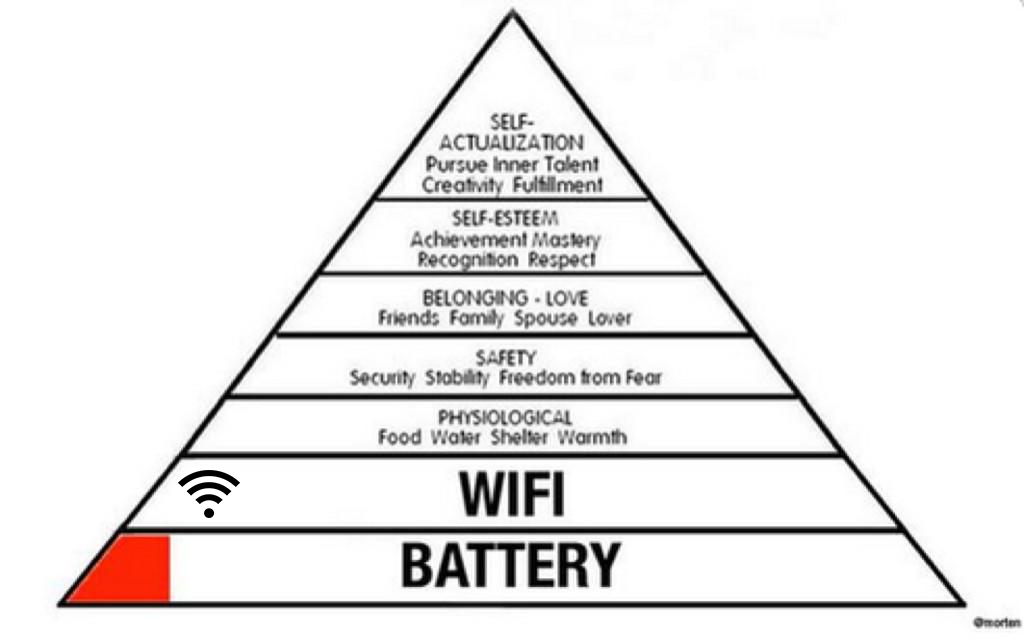
It's like a customer version of Maslow's hierarchy of needs. 
See below for a lovely modern take on this...
Image result for the modern hierarchy of needs
But Seth's point is more serious... and really apt considering it was Apple's annual launch day. 
A company that through it's marketing and design has changed the conversation and ecosystem around telecomms more than any other. See his point on smartphones later on. 
The reason I include it here is his point about freelancers 
"Most freelancers have been so beaten down in the quest to make a go of it, they stop at function and take what they can get."
Which in some way is a trap I am falling into. My training company Great Marketing Works didn't do that - we had connection and style. 
Perhaps my freelancing as a consultant does as well? We have some great gigs coming up. 
I want to have the audacity to redefine 'function' (see his end conclusion...) 

I hope for your startup you decide to do the same - or at least do something with style.... 
Here's to doing that and here's to Seth Godin's A hierarchy of value when everything functions

When two things offer simply the same appropriate level of function, we'll choose the cheap one.
Hierarchy of value
But if one offers more connection than the other, it is worth more. 
This hotel over that one. Where is the tribe, do people like me do things like this, who's there, will they miss me, do I trust them, have I been here before...
If two items offer connection, but one offers the approval and sexiness that style brings, some of us will pay extra for that. After all, style promises ever more connection.
And at the top of the hierarchy is our quest for scarcity, desire and the hotness of now. 
In a market like smartphones, it's pretty clear that it's really difficult to offer more function than the other guy. And the quality of connection, the very attribute that fuels the smartphone, was surrendered to the app makers a long time ago. Which leaves the sexiness of a drop-dead case and the urgency of the latest model.
What do you and your team offer? Where are you in the hierarchy?
Most freelancers have been so beaten down in the quest to make a go of it, they stop at function and take what they can get. Some businesses (small and large) find the patience and guts to offer connection or even style. And every once in awhile, an idea and an organization come along that promise to share the elusive hot that sits atop the pyramid.
So, buy a Harley, not because it can move you from here to there cheaper, but because it comes with a tribe. And buy that Nars lipstick because of the way it makes you feel. And get on line for that new gadget, because, hey, there's a line.
And then, someone finds the audacity to redefine 'function' and the whole thing begins again.

Monday, 27 January 2014

Treat different people differently... but how?

We are just doing some customer research at Justaxi - a mobile phone app which helps you get the best price taxi service in Manchester - and so this blog by Seth Godin is rather well timed.

He has a great point - but in a way - he doesn't have the answer.

His point is treat different people differently.

"Don't teach your students as if they are a monolithic population of learners. They learn differently, they have different goals, different skills, different backgrounds.

Don't sell to your customers as if they are a fungible commodity, a walking ATM waiting for you to punch. Six of one are not like half a dozen of the other. They tell themselves different stories, have different needs and demand something different from you.

Different voters, different donors, different employees--we have the choice to treat them as individuals. Not only do they need different things, but they offer differing amounts of value to you and to your project.

The moment your policy interferes with their uniqueness, the policy has cost you something.

We used to have no choice. There was only one set of data for the student body, one way to put things on the shelf of the local market, one opportunity to talk to the entire audience...

One of the biggest unfilled promises of the digital age is the opportunity to go beyond demographics and census data. Personalization wasn't supposed to be a cleverly veiled way to chase prospects around the web, showing them the same spammy ad for the same lame stuff as everyone else sees.

No, it is a chance to differentiate at a human scale, to use behavior as the most important clue about what people want and more important, what they need.

It's a no-brainer to treat the quarterback of the football team differently from the head of the chess club. We treat our bank's biggest investor with more care than someone who merely wants to trade in a bag of pennies. Instead of reserving this special treatment for a few outliers, though, we ought to consider what happens if we offer it to all of those we value.

The long tail of everything means that there's something for everyone--a blog to read, a charity to donate to, a skill to learn. When you send everyone the same email, demand everyone learn from the same lesson plan or try to sell everyone the same service, you've missed it.

A very long time ago, shoe salespeople realized that shoes that don't fit are difficult to sell, regardless of what you've got in stock. Today, the people you serve are coming to realize that like their shoe size, their needs are different, regardless of what your urgent agenda might be.

So.... what does this mean for an taxi comparison app like JusTaxi - in truth - I don't know. I know that it means that perhaps we aim for personalization but how we do that - is in the hands of the techies - which means.... we will have to ask nicely and tread softly.

Perhaps bringing in the Facebook and social login's will make a difference as the more we know about each customer the more we can personalise the offer. But how much can you personalize the best price on a taxi in Manchester?  

Friday, 22 November 2013

Marketing planning and the real question to ask - Who is this Marketing FOR?

This week and most of next week I will be reviewing the marketing (especially the online and social media marketing) for The Apprentice Academy who are moving into helping employers recruit digital apprentices. 

This marketing planning review work over the last 6 months I also do in a much more haphazard way in my dreams (I do really and really do which is sad really and really sad.)

This morning I awoke to an imagine meeting with my MD about numbers for the next 12 months - only for the numbers and the vision to disappear in the 3 seconds it took me to awaken. Damn it all I will now have to do the real work too.

So this article from my hero Seth Godin nicely puts it all into simple perspective - something sometimes lost in the spreadsheets and analysis of modern online marketing...

Who is this marketing for?

Before you spend a minute or a dollar on marketing, perhaps you could answer some questions:
  • Who, precisely, are you trying to reach?
  • What change are you trying to make?
  • How will you know if it's working?
  • How long before you will lose patience?
  • How long before someone on your team gets to change the mission?
  • How much time and money are you prepared to spend?
  • Who gets to approve this work?
  • Who are you trying to please or impress?
It's cheaper to answer these questions than it is to spend time and money on marketing, but, alas, it usually doesn't happen that way.
I don't know if we can answer all of the questions above at The Apprentice Academy - but we can certainly try to answer the following in our next meeting. 
  • Who, precisely, are you trying to reach?
  • What change are you trying to make?
  • How will you know if it's working?
  • How much time and money are you prepared to spend?
  • Who gets to approve this work?
The rest I fear are too political for me to dare to ask - what about for your organisation? Would people really answer....
  • How long before WE / SOMEONE / you will lose patience?
  • How long before someone on your team gets to change the mission?
  • Who are you trying to please or impress?

    The companies that can truly answer those types of questions honestly, are honestly, going to do rather well this next year. 

      Wednesday, 16 October 2013

      SMILE more.

      How to get more people loving what you do on Social Media is simple - you just SMILE more.

      Smile

      • S – Solve their problems. Offer your knowledge and insights and be helpful with no expectations of making a sale in return
      • M – Make them feel valued. Treat everyone you meet as if they are the most important person in your world at that moment
      • I – inform, educate and entertain with quality content. It could be your free eBook, sharing your knowledge, your blogs, articles from other websites or anything you feel adds value to their social media experience.
      • L – Listen and acknowledge. If you see a post from someone who has achieved something or you have enjoyed reading their blog…tell them. If they’re having a bad day, empathise.
      • E – ENGAGE! Respond to people who comment on your posts or tweet you. Initiate conversations with new people – If you engage with six new people each day, at the end of the year 2,140 will know your business exists who don’t right now. You haven’t had to leave home to meet them either!
      If you want more sales from social media, put the needs of your audience ahead of your own. Don’t be someone who only broadcasts how wonderful you are (we take that as a given!)

      Go be the person with the big SMILE whose competitors don’t get a look in.

      Thursday, 8 August 2013

      How to take your blogging to the next level - top tips from the professionals from 5 - 10.


      Making a blog remarkable is hard work. It takes time and effort. But what about when a whole company starts blogging to help the search engine optimization of their website and get the company more social like with us over at The Apprentice Academy.

      What happens then?   

      What about the differences in quality?  What about the quality (or otherwise) of the grammar in the blogs produced?  Was it really up to the marketing manager to manage people's personal blogs? 

      Is this a branding issue for the company?

      So many questions and not many answers, especially not from me. As I have a bit of a love hate relationship with grammar due to my own grandma being very pushy on the subject (bad pun intended and polarizing I am sure...)

      But in the continuation of 5 top tips it seems we may be onto something.Grammar might be more important than I first thought...

      So here are the rest of the top ten tips on remarkable blogging… with a lovely quote to start off from the author – Heyo's Mike Sweeney

      “Remarkable blog posts don’t just happen. The myth of the blog post that unexpectedly “goes viral” is just that…a myth. Behind every blog post that generates robust traffic, real engagement and quality sharing is a plan that addresses all of the items (in both blogs ) and even more.”


      1. Remarkable blog posts follow a great headline with an even better opening paragraph.

      There are plenty of things you can try here – some people like asking compelling questions or making a statement that might challenge common opinion on your subject, creating controversy in your reader’s mind. Others, like myself, typically start with a quick and personal story or include a jaw-dropping stat. Regardless of your technique, this is no different than the lead paragraph of a newspaper or magazine article; it is what has to draw the reader into the rest of your piece and capture attention. Your intro paragraph needs to contain a compelling hook—some reason to keep reading, and should always give the reader a succinct overview of what you plan to cover in your post.

      2. Remarkable blog posts cannot contain sloppy errors.

      The greatest ideas—and a remarkable post—can be ruined by the really simple stuff: spelling errors, formatting problems, murky visuals, awkward spacing, or broken links.
      In carpentry, errors are avoided using a “measure twice, cut once” mindset. In blogging, I say it’s more like “edit thrice, publish once.”

      3. Remarkable blog posts are optimized for humans…and for search engines.

      This, like many of the other nine points, deserves its own post. If you’ve been blogging for an extended period of time, and you’re not seeing the benefits of organic search traffic, then you’re likely doing something wrong from an SEO standpoint.

      Here are a few starting tips:
      • Do your keyword research. The Google keyword tool was already awesome, and they just made it even more useful.
      • Complete your meta data. At a bare minimum, write a keyword-rich title tag and description tag.
      • Tag your images.  Be certain to address the image file name, alt text, and title tag – all should include target keywords.
      • Find opportunities to interlink. Make it a practice to link to previous posts on your blog.
      • Link to outside sources. This will not only boost SEO benefits, but it creates friendly fellow- blogger relationships.

      4. Remarkable blog posts are easily shareable.

      Just today, I checked out a prospective client’s blog, and when I got there, I was pleasantly surprised at the volume of content. Then came the cringe-worthy moment…all that content, and so difficult to share. No LinkedIn sharing option. The Tweet button led to a dead end. And there was no easy way to forward along via email.

      Creating remarkable blog posts is hard. Sharing them should not be. Allison Novak’s 7 Tips for Social Sharing will get you started down the right path.

      5. Remarkable blog posts include a call to action.

      If you’ve followed these steps and created a remarkable blog post, you now have a captive audience. They may want to move on to something else, but at least give them an opportunity to hang out and get more involved with what you’re doing.
      Keep your calls to action short and simple. Some might offer the reader more information, like “Read these related blog posts.” Others might be calls for engagement, like “Anything to add? What else makes for a remarkable blog post? Share in the comments.” Another option is to offer a different piece of content that allows the reader to delve deeper into the blog post topic, like “Want more blogging tips? Download our ultimate guide to creating remarkable blog posts.” All will create an increased level of audience engagement.

      So to answer the question posed by The Apprentice Academy's new blogging mission - perhaps the most important thing really is quality and we need to train our TAA staff and non training digital people, who may not love writing - or blogging - to get them to start to love editing. 

      The same has to be done for our new digital apprentices - which ironically it is - in the course. 
      Looks like my grandma was right. Which, to be fair, she was about a lot of other things. 

      So is that sometimes (and this is where the irony must stop) "it's not what you say, but how you say it."

      What do you think? 

      More importantly, would you like to know more about how our new digital apprentices who will help your company (if you are based in Manchester and are part of a company of more than 5 people) get on the most out of social media? 


      How's that for a call to action ;)

      Wednesday, 7 August 2013

      The First Five Top Things to do with Blogging beyond starting up and getting involved...

      At my old agency - Great Marketing Works - we taught companies how to be GREAT at marketing.

      Each letter in GREAT standing for something - see here - the R standing for "remarkable" - mainly taken from Seth Godin's wonderful works on the subject - if you have never read his blog - here is a link - which itself is a series of how to guides by example.

      But for now, have a think, are your blog post remarkable? i.e. would someone who read them tell someone else, would they share it, would they comment on it?

      Are you blogs really GREAT content?

      With more and more people realizing that the old game of SEO has played out and that Clay Shirky (et al) were right when they predicted everyone would be a publisher soon under the great book title -  "Here comes everybody" - so the greatness or otherwise of your content has become a big issue.

      Be that a PDF for your site, a little bit of link bait for your SEO, a well phrased personal blog to enhance your own expertise level on Linkedin, or now a days a nicely designed infographic for the informational hungry (time poor) visual consumer of today's SO LO MO world.

      It's something that I have been thinking about whilst working helping The Apprentice Academy get more social (and help their SEO) and for their brand to become a thought leader in the realm of digital apprenticeships. Which it will - as God is my witness. As our new digital apprentices will kick ass, as I am one of their trainers, and the course looks amazing...

      Anyhoo - this below is taken from Heyo's Mike Sweeney - and I like the style and the feel of the piece which raises some great points about blogging.

      Most of which I have not adhered to at all in this blog for ironies sake. The first one makes me chuckle in a blog based on The First Five Top Things to do with Blogging.


      1. Remarkable blog posts focus on one point and one point only.


      One of the first things I do when I sit down to plan a blog post is determine the one and only point that every reader should take away after reading it. Sure, you’re going to need several supporting points, but if you stay focused on that one objective, your readers will stay focused with you.
      For instance, after you’re done reading this post, I want you to think, “Wow. I need to start (continue) creating remarkable blog posts and use these ten tips as a guide, or my material will get ignored.”


      2. Remarkable blog posts help someone out.


      If you’re about to hit publish and you can’t say to yourself, “This is going to help at least one person—if not potentially thousands—do something better, learn something new, or discover a new way of thinking about something,” then you’re not doing your job.
      The great bloggers understand that educating and entertaining the audience is the best way to keep them coming back.


      3. Remarkable blog posts follow the same story structure you learned when you were nine years old.


      A blog post should be written like any other piece of content—it needs a well-defined beginning, middle, and end. Start with an outline (like your fourth-grade teacher taught you) and your final product will almost write itself (almost). Keep it organized, both from a formatting standpoint and from a copy standpoint, and you will keep your reader’s head in the game. Who knows, he or she may even make it through the entire post, which brings me to my next point…


      4. Remarkable blog posts are skimmable.


      If you’ve captivated your readers enough that they are hanging on every word of your post, good for you. You’ve definitely created a remarkable blog post.
      For the rest of you, make sure your blog posts are skimmable. Your reader should be able to skim the post, pick up the main points, and decide whether he or she wants to dig in deeper on a particular topic. Use methods like bullets, headings and sub-headings, numbered lists, and bolded call-outs to achieve this.


      5. Remarkable blog posts use headlines that are both relevant and attention-grabbing.


      My stance on headlines is a little different from others’. Some believe that you should focus exclusively on the attention-grabbing aspects of the headline, most times at the expense of the relevancy of the headline. Not only is that unfair to your readers, but when they do click over and realize that the headline doesn’t match the content, you just lost them.

      I used to write my headlines last. That was a mistake. I now write them first, because a great headline can inspire a great post, or even change your initial direction for the post.

       Copyblogger is a fantastic resource for those looking to write great blog post headlines.


      So we hope that these top five top tips taken from Heyo's Mike Sweeney are useful. There are 5 more to follow when I can find the time to edit them.

      You see this is the other thing about blogging - is that it takes time. Time and effort. Time and effort that should be rewarded. Has to be rewarded. But as a business owner (if you are a business owner reading this) wouldn't it be great to have a digital apprentice to help you / your team on the editing? Or even on some of the production of some of the blogs?

      The new digital apprentices from The Apprentice Academy are here to help your marketing team be more productive - so save your time and help you get the most out of this HUGE opportunity that social media is.  

      Did you know that 77% of people would rather buy from a brand where the CEO blogs? Amazing isn't it.

      But who says the CEO has to edit his own work....or put it out on twitter.

      Wednesday, 31 July 2013

      Today it was really interesting to read something about branding. Which made me think...

      I used to do workshops on branding. And our branding back here at The Apprentice Academy is starting to get standardized - something I have been gently implementing for a couple of months.  The change is coming... we will get there. 

      So today it was really interesting to read something about branding. Which made me think...

      From the Linchpin Academy (like the name...) 

      There is an  edited down a brilliant video that talks about BRAND.  

      You will find the video here.

      It is really well worth a watch. 

      This video talks about lots of global brands which obviously have taken a colossal amount of money, time and effort to build the brand equity to where it is now.   

      Couple of keys things to take away from the video were:
      • Brand is an expectation you set and it's not something you own! 
      • Expectation is set through a prospect's experience.
      • Declaration of a promise or value is nothing more than words.  (saying you deliver great customer service isn't the same as experiencing great customer service)
      • You have to pay to build a brand. You either pay with money or time. There are no shortcuts.
      All the above is soooo true. 

      Your customer MUST experience something which aligns with your story and your brand promise for it to become something they will tell people about. 

      And you only have three things in life - money. time and energy. There are no shortcuts - what you pay with one you save with the other. 

      There are no shortcuts to establishing a brand especially when you are in an established industry like we are at The Apprentice Academy. 

      Apprenticeships are as old as the hills. But new modern apprenticeships like our digital and social media apprenticeships are brand new. But they do not make a brand. They start it.

      Wednesday, 10 April 2013

      Opening up to open data. But my mind seems closed to the idea.

      Big data and open data. Concepts everyone is talking about it would seem.

      Both are very interesting topics, with a potential of big data to change the very way we see the world.

      And with open data, a potential for business opportunities often with some large caveats around privacy etc.

      However, as TechCruch reports, today another step along the road to liberating government data across the region so that startups can get their hands on it: as an EU committee made up of member states’ representatives has endorsed plans to modernise the 2003 public information directive to make all non-personal public sector info available for reuse.

      Opening up public sector data is something the EC believes will help European startups and businesses by providing access to valuable data at “zero or very low cost”:

      Following today’s committee endorsement, the next stage in the process will be for the European Parliament to approve the new rules.

      Back in 2011 when it proposed to revise the public data directive, the EC projected that its Open Data Strategy will end up injecting €40 billion annually to the EU’s economy, driving growth and jobs.

      The revised directive will include a right to reuse public information; expand the remit to include libraries, museums and archives; create a transparent pricing framework for reproduction, provision and dissemination of the information which also aims to keep costs to a marginal minimum; and encourage data to be made available in open machine-readable formats.

      This only happened today (10 April 2013) so yesterday's event with the Technology Strategy Board event held by Techcelrate was rather well timed.

      However, for me I realised that being a creative type, working in mobile marketing, that I simply wouldn't get some of the language used or terminology or even the concepts. And I didn't understand the business case.

      With Open data, the public sector giving business access to all the data it has in many areas, makes sense for start ups to use it to make money for themselves. Got it - there are a number who have already like... Numberhood.

      My issue I suppose is the second part of the equation - that the public sector will swap data with the private sector hoping that private sector cash will recycle it and add value to it and then it back to them mixed with their own data as well.

      I just don't GET why a private sector organisation would do this?

      On the one hand it might be very commercially sensitive and on the other hand it might be illegal!

      I understand how the private sector (which I am part of with Great Marketing Works and mobile app development) has it's own BIG data opportunity. As over the years, even though the backlash has been said to have been coming, the world has given data to private companies freely and easily. Either with intent i.e. swapping almost meaningless things like points and discounts for their buying habits data or unintentionally by going to websites with cookies in them and being followed around the internet.

      This has changed whole industries and created new winners in landscapes are varied as in retail grocery shopping i.e. with Tesco's rise to the top due to loyalty cards and subsequent business intelligence of their demographics to Facebook PPC advertising mechanisms and the intention economy.

      Both for the record, I am a great believer of. In part as the knowledge of the cutting edge marketing of them has given me a living :)

      The next level I suppose would be open data mixing with such private data to give use multiple data sets from several sources to find gold in them there hills (or perhaps another metaphor would be data being the new oil - which seems to be said a lot.)

      It is simply that I do not get if the private sector has all the cards - why would it want to play with the public?

      Wednesday, 16 January 2013

      Facebook's new search function - the first shot in the war of SEO and Social - or just a jolly good idea?

      So I was wrong - the Facebook announcement had nothing to do with mobile.... well it kinda didn't - but what it did show us was something I predicted along time ago and argued about at #SAScon last year.

      It's a new search engine called Graph Search! And believe you me (which many people didnt last year - Facebook's new search function is different. Very different!)

      Facebook isn't incorporating Google's search function into Facebook search. Instead, Facebook has decided to launch Graph Search to help improve the Facebook search experience. In fact, Graph Search is powered by Microsoft Bing -- which makes sense, since Bing has also integrated Facebook into its own social search function, according to VentureBeat.

      What Is Facebook's New Graph Search?

      So, what is Facebook's Graph Search, and how is it different from what's already out on the market? As Gizmodo puts it:

      "It's an attempt to do what Google failed at doing -- pulling all the information that matters to you within the context of your social life, skipping the results that are popular to the internet, in favor of the results that are popular within a group you actually give a damn about. Not a horde of strangers."

      Ahhh welcome to the world predicted by myself and others. This is Semantic search 101 on steriods and Facebook are the first to do it. Personally I thought Google Plus might have the march on them - but no one really signed up to it.

      I also should have bought shares in Facebook when they were around $17 rather than waiting on till they hit $15 - which was a guess at best... but a pretty close one.

      Facebook new search will utilize social signals to try to create a truly social search experience. Graph Search, according to Facebook, is focusing on four core areas: people, photos, places, and interests.

      But what does it mean for greatmarketing folks like us... well rather a lot....

      1) Searching for a Business

      Let's say you're looking for a great coffee house. Instead of going to Google and searching for coffee houses near you -- which will return the coffee houses that have done the best job at SEO -- you could use Facebook search and get recommendations based on what your Facebook friends like the most. It will use signals like location-based check-ins, tags of that coffee house, or Likes of that Facebook Page to indicate it is a good choice.

      2) Searching for Content

      Facebook is also frequently used to share and surface content. If you're looking for, say, photos of your friends, the search engine will allow you to type in extremely specific long-tail queries like "Photos of my friends at Bar Around the Corner in 2011." You could expand this concept to all types of shared content such as articles, music, videos, memes, and the like (now I got marketers' minds spinning, eh?).

      3) Searching for Connections

      Facebook's search engine will also help users expand their social reach. Because the search function takes into account a user's likes, history, location, and proclivities, we weren't that far off when we predicted their announcement might be a new dating service.

      Users will be able to search for people they want to simply talk to and network with, by inputting a search like "People who like marketing." This is the kind of functionality that will help users on a personal and professional level.

      BUT - Should Marketers Care About Facebook's Search Engine?

      According to Hubspot - where most of this article is from - it's hard to say for sure since this hasn't even rolled out to the public yet, I'd say, you bet your buttons marketers should care about Facebook's search engine. Inbound marketers know two things (well, they know more than two things, but here are two biggies):

      Content is critical to marketing success, and ...
      Social media helps give your business visibility.

      This new search function is helping to not only make it easier for people to find your business and its content via Facebook, but it's also making it easier for it to reach new audiences! If you're creating the best content in the world, and maintaining an amazing Facebook business page that markets that content, it's far more likely now (or when Facebook launches Graph Search) than it was before that new audiences are going to be able to stumble upon it during their point of need.

      And for those of us in marketing but with an eye on the entrepreneurial lifestyles - the potential for this is HUGE - it is much more than marketing... but that's another story... for another time.